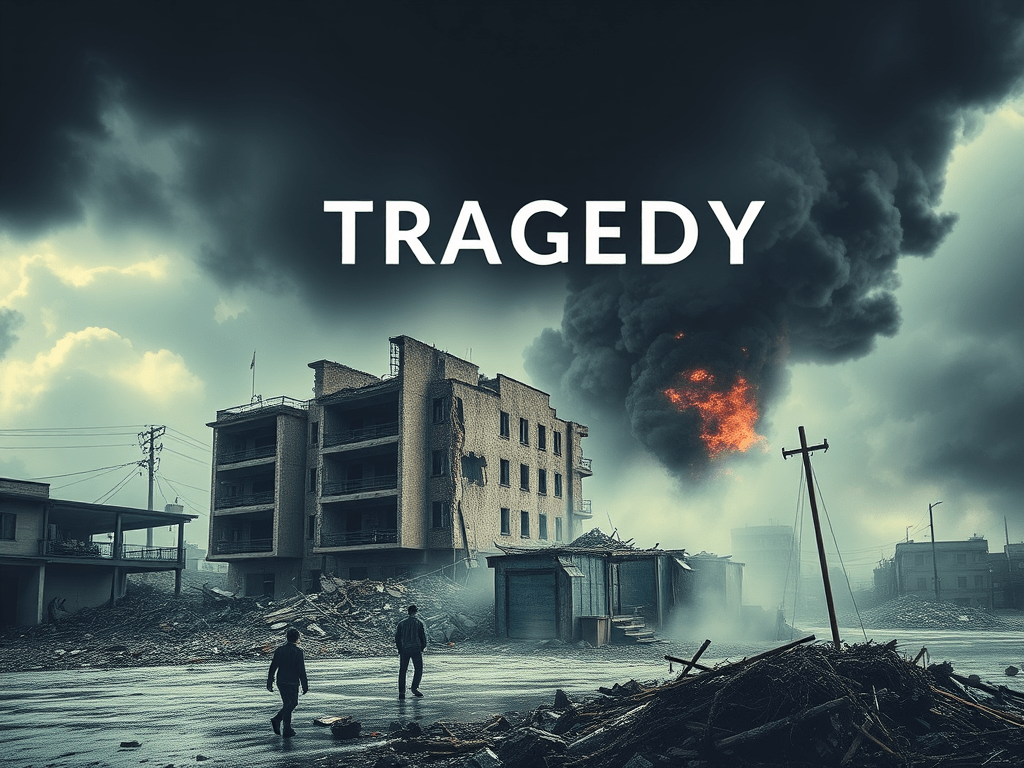
When a powerful earthquake hits or a devastating storm sweeps through a city, the physical damage is immediately visible—but the questions that arise in our hearts often cut much deeper.
Tragedies like the recent earthquake in Asia leave us wrestling with profound spiritual questions: “Where is God in all this?” “Why would a loving God allow something so destructive?” “If God is all-powerful, why doesn’t He stop these things from happening?”
These are honest questions that deserve thoughtful reflection rather than quick, simplistic answers.
Creation’s Brokenness
Scripture gives us an important perspective in Romans 8:22: “For we know that the whole creation has been groaning as in the pains of childbirth right up to the present time.”
This world—though beautiful and awe-inspiring—is not functioning as God originally designed it. When sin entered humanity, its effects rippled beyond our hearts and relationships. The entire created order was affected.
That “groaning” Paul describes sometimes manifests as earthquakes, floods, wildfires, and tsunamis. These are not random acts of divine punishment—they are signs that something is fundamentally broken in creation itself. The natural world, like humanity, awaits complete restoration.
God’s Presence in Pain
It’s vital to understand: God is not the author of suffering, but He is intimately present within it.
Psalm 34:18 reminds us: “The Lord is close to the brokenhearted and saves those who are crushed in spirit.”
The God we worship doesn’t remain distant from our suffering. He draws especially near to those experiencing pain. We see this most powerfully in Jesus, who entered fully into human suffering rather than remaining safely removed from it.
In the aftermath of disaster, God’s presence often becomes evident through acts of courage, compassion, and unexpected grace: rescue workers who risk their lives, strangers who open their homes, communities that rally together across dividing lines of race, religion, or politics.
Awakening Our Hearts
Natural disasters often serve as spiritual wake-up calls. When everything stable is suddenly unstable, we’re forced to evaluate what truly matters.
Disasters strip away our illusions of self-sufficiency and control. They remind us that life is fragile, that our time is limited, and that material possessions offer little lasting security.
In this way, even tragic events can become catalysts for spiritual growth, reconnection with God, and recognition of what truly matters—relationships, compassion, faith, and love.
The Promise of Restoration
Christianity doesn’t offer simple explanations for suffering, but it does offer something perhaps more valuable: the promise that suffering doesn’t have the final word.
God has committed Himself to the complete restoration of all things. Revelation 21:4 describes a future where “He will wipe every tear from their eyes. There will be no more death or mourning or crying or pain, for the old order of things has passed away.”
Natural disasters remind us that this world is not yet as it should be—but they also heighten our longing for God’s promised renewal of all things.
Our Response to Disaster
While theological reflection is important, our faith must also express itself in tangible ways:
- Compassionate Prayer Prayer connects us to God’s heart and to those suffering, even from a distance. It’s not passive resignation but active participation in God’s work of comfort and healing.
- Generous Action Whether through financial donations, volunteering, or advocating for better disaster preparedness and response—especially for vulnerable communities—our actions become expressions of God’s love in tangible form.
- Eternal Perspective While holding the suffering of the present moment with utmost seriousness, we can also hold onto hope that current sufferings are “not worth comparing with the glory that will be revealed in us” (Romans 8:18).
Walking with Unanswered Questions
Some questions about suffering may remain unanswered in this life. The biblical story of Job reminds us that even direct divine encounters don’t always provide the explanations we seek.
But faith allows us to trust in God’s character even when we don’t understand His ways. We can acknowledge the reality of suffering while still affirming God’s goodness, love, and ultimate purpose to restore all things.
In the end, the question isn’t whether God allows natural disasters—they are part of our broken world’s reality. The deeper question is whether God remains present, loving, and redemptive even within tragedy. Christian faith answers with a resounding “yes.”
A Prayer in Times of Disaster
Heavenly Father, in moments when creation groans and human hearts break, draw near to those who suffer. We don’t pretend to understand all Your ways, but we trust Your heart. Comfort the grieving, strengthen the rescue workers, and guide those leading relief efforts. Help us to be Your hands and feet, bringing practical help and spiritual hope. Remind us that this broken world is not the end of the story, and use even these painful moments to draw hearts to You. In Jesus’ name, amen.

 Bishop G.E. Livingston's Blog
Leave a comment