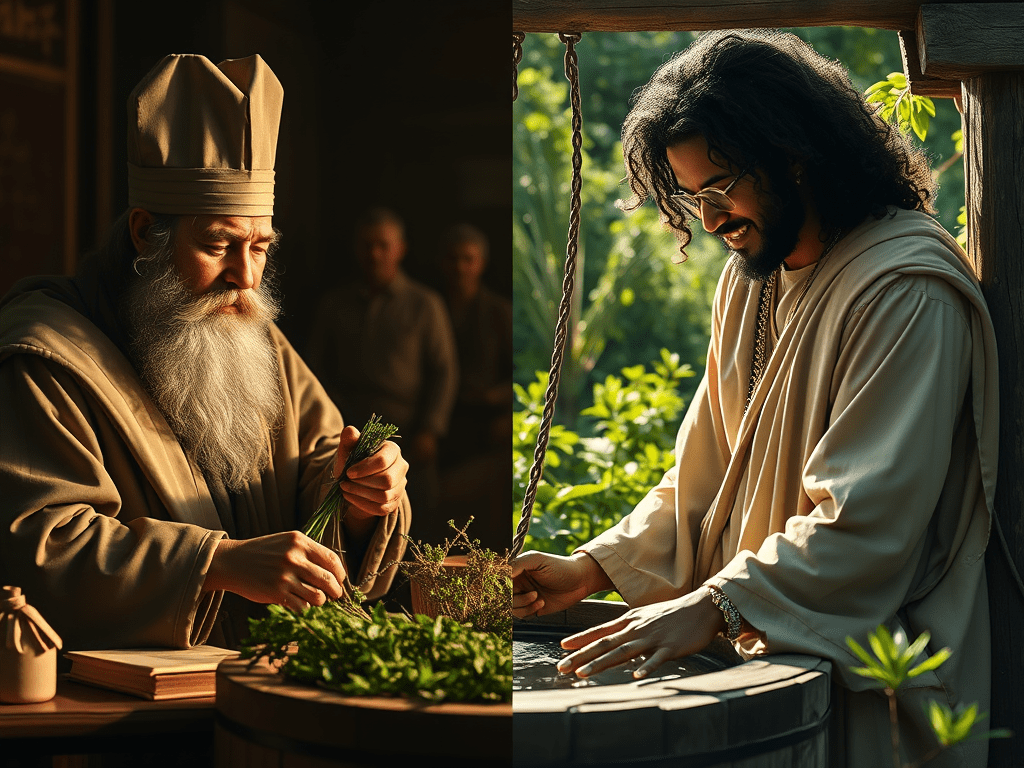
When I think about worship, I’m often reminded of two paths we can take—one focused on outward actions and another centered on the heart. The Bible gives us a perfect illustration of this tension through the contrasting approaches of the Pharisees and Jesus.
The Pharisee’s Way: When Rituals Become the Focus
The Pharisees were masters of religious observation. They meticulously followed hundreds of rules, counting steps on the Sabbath and carefully tithing even their garden herbs. Jesus acknowledged their dedication to detail when He said, “You give a tenth of your spices—mint, dill and cumin” (Matthew 23:23 NIV).
But something vital was missing. These same Pharisees often missed the deeper purpose behind these practices. Jesus pointed this out when He told them, “You clean the outside of the cup and dish, but inside they are full of greed and self-indulgence” (Matthew 23:25). Their worship had become primarily about external performance rather than internal transformation.
Jesus’s Way: Relationship at the Heart
In contrast, Jesus consistently emphasized the heart behind our actions. When encountering the woman at the well, He shifted the conversation from where to worship to how to worship: “God is spirit, and His worshipers must worship in the Spirit and in truth” (John 4:24 NIV).
Jesus didn’t dismiss rituals entirely—He participated in Passover and attended synagogue regularly. But He taught that these practices should flow from and strengthen our relationship with God, not replace it.
An Illustration: The Garden
I think of it like tending a garden. The Pharisees were like gardeners who became so focused on following the exact schedule for watering, precisely measuring the distance between plants, and using specific tools that they forgot the purpose was to grow beautiful, living things. They kept perfect gardens that lacked life and fruit.
Jesus, however, approached gardening with love for the plants themselves. He knew the rules of gardening served the relationship between gardener and garden. His focus wasn’t just on watering schedules but on nurturing growth and bringing forth fruit.
Key Takeaways
- Rituals have purpose – Sacred practices help us connect with God and remember His truths.
- Heart matters most – External actions without internal devotion become empty religion.
- Balance is biblical – Jesus didn’t eliminate tradition; He infused it with relationship.
- Love fulfills the law – When we love God deeply, we naturally want to honor Him in our actions.
Moving Forward: Practical Steps
If you’re seeking more heart in your worship, consider these simple actions:
- Ask why – When participating in religious practices, reflect on their deeper meaning.
- Seek freshness – Find new ways to connect with God beyond familiar routines.
- Prioritize presence – Set aside time to simply be with God without an agenda.
- Extend grace – Remember that both you and others are on a journey of growth.
- Check your heart – Regularly examine your motivations for religious activities.
The beautiful truth is that God desires both our dedicated practices and our devoted hearts. As Jesus taught, “These you ought to have done, without neglecting the others” (Matthew 23:23 KJV). May we find the sacred balance of rituals that express and deepen our loving relationship with God.
What aspects of worship do you find most meaningful in your own spiritual journey?

 Bishop G.E. Livingston's Blog
Leave a comment